
 Por Francisco Javier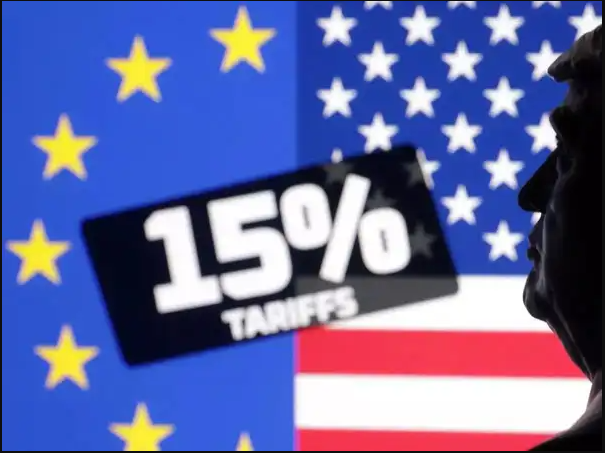
Lead
The U.S. government has officially confirmed the introduction of a new package of elevated import tariffs on goods from several European countries, effective February 1, 2026. The decision, driven by rising geopolitical tensions, предусматривает an initial tariff increase to 10%, with a potential escalation to 25% by summer, targeting key economies such as Germany, France, and Sweden. Analysts at Barclays Capital have already warned of heightened volatility across European markets and growing pressure on corporate earnings.
Drivers and Underlying Causes
According to data from the European Automobile Manufacturers’ Association (ACEA), the new tariff regime could lead to a 28% decline in exports for certain product categories destined for the U.S. market.
Spain, despite lower direct exposure compared to Germany or France, is far from immune. Annual bilateral trade volumes of approximately €18 billion are now under threat. Sectors ranging from industrial machinery to wine production could see U.S. exports fall by as much as 18%.
In response, the Spanish government announced a €14.1 billion Trade Adaptation Plan aimed at supporting affected businesses. However, as noted by economic commentators at El País, these measures are designed for long-term structural adjustment, while market shocks are unfolding in real time.
The Market Chain Reaction
Historically, comparable macroeconomic shocks trigger two parallel dynamics:
- A decline in traditional assets (manufacturing equities, the euro)
- A sharp rise in activity across markets that enable hedging or profiting from volatility
Reports from FINRA for Q4 2025 point to a record inflow of private capital into instruments designed to capitalize on short-term trends driven by political decisions. As predictability fades in conventional investments, professional market participants increasingly turn to mechanisms capable of analyzing capital flows in real time.
Expert Perspective
“This is a classic case where regulatory shifts generate market waves lasting from several weeks to several months,” says María López, Head of Research at a Madrid-based investment firm.
“Those with access to interbank liquidity monitoring and algorithmic news-flow analysis can identify anomalies before they are reflected in exchange prices. This is no longer traditional trading — it’s closer to technological arbitrage.”
From Theory to Practice
This principle underpins a growing number of specialized platforms that gained traction across Europe following the 2022 sanctions environment.
One example is USA Imposes New Tariffs in 2026 — How Europe, Including Spain, Is Responding, which integrates a real-time module scanning:
- official trade ministry communiqués
- political speeches
- market index reports
The system converts these data streams into actionable market signals. According to the platform’s internal audit for December 2025:
- 83% of active EU users utilized at least one signal related to trade agreements
- the average position duration was 47 minutes
This is not company-focused investing — it is engagement with market reactions to events.
The Broader Context
The trend is clear: the global economy is moving toward a more fragmented trade system, where political statements alone can trigger abrupt capital movements.
In its latest Financial Stability Report, the Bank of Spain highlighted increased retail investor activity in derivative markets as a method of capital protection. Technologies once exclusive to hedge funds via terminals like Bloomberg are now being democratized through adaptive platforms, offering localized interfaces and euro-denominated access.
Key Takeaways for the Reader
The current tariff situation is not an isolated incident but a blueprint for future market disruptions. It creates an environment where speed of analysis and access to specialized tools become decisive advantages.
While governments negotiate and corporations restructure supply chains, markets continue to generate daily volatility-driven opportunities.
An Objective Opportunity
Platforms specializing in geopolitical and macroeconomic analysis often open full access during periods of heightened market activity to gather data and calibrate algorithms.
At present, USA Imposes New Tariffs in 2026 — How Europe, Including Spain, Is Responding is conducting verification of new registrations from European IP addresses to grant full access to its “Geopolitical Risk” module. This is a standard procedure aligned with ESMA requirements and is temporarily activated.
A detailed overview of the platform’s mechanisms — including tariff-related data processing examples — becomes available within the user dashboard after registration and verification.
This material is based on publications from the European Commission, Banco de España, Barclays Research, and ACEA. Market activity involves risk due to volatility. Users are advised to review service terms before engaging.